

The Lost Art of Christian Beauty-Making
Let’s be honest—when people think about Christianity in the West today, "beauty-making" isn't usually the first thing that comes to mind. If we’re being really transparent, we might even be known for the opposite. We’re often seen as the people who neglect the environment, create art that prioritizes a "message" over actual craft, and move through the world with a certain indifference toward the physical places we inhabit.

It makes you wonder: What happened?
Rewind the clock a few centuries and you’ll find a very different story. Christians weren't just participating in culture; Christians were the ones making the finest art and leading the way in scientific discovery. Isaac Newton revolutionized physics. Johannes Kepler mapped the heavens. Rembrandt captured the soul on canvas, and Bach transformed music as we know it. The Church wasn’t just a patron of these things—it was the heartbeat behind them.
Somewhere along the way, we lost that vision.
Over the past several decades, an "evangelical" movement reclaimed the personal heart of the gospel: knowing and loving Jesus. This recovery was good. However, somewhere along the way, a new assumption took hold—the belief that nothing else really mattered. We began to think that the spiritual was everything and the physical was, at best, a distraction. But as we’ll see, when we lose our grip on the beauty of the world, we actually lose a vital part of the heart of God.
Is it possible that the God who saves our souls also deeply, passionately cares about the "stuff" of our lives? What if cultivating beauty isn't a distraction from our faith, but one of the most profound ways we actually practice it?
God Creates All Things Good
If you look at the very first pages of the Bible, you don't find a list of rules. You find a God who creates. And throughout Genesis 1, we hear this beautiful, rhythmic refrain: "And God saw that it was good." Five times God pauses, sits back, and simply admires His work. Then, at the very end, he looks at the whole of it and declares it to be "very good" (Gen. 1:31).
Creation—physical matter—is good. Humanity is the crown of that creation, but the "stuff" around us is good, too. This tells us two crucial things. First, everything beautiful exists because God is beautiful and it came from Him.
But second, it reveals that God’s redemptive heart is after all things. Colossians 1 reminds us that the cross isn't just about making you right with God; it’s about Jesus reconciling all things to Himself.
God doesn’t make junk, and He has no intention of junking what He has made. He is moving toward this world with a redeeming, restorative love.
God Cultivates Beauty
We often think of God as the Great Architect, but Genesis 2 shows Him as the Great Gardener.
"And the Lord God planted a garden in Eden... and out of the ground the Lord God made to grow every tree that is pleasant to the sight and good for food."
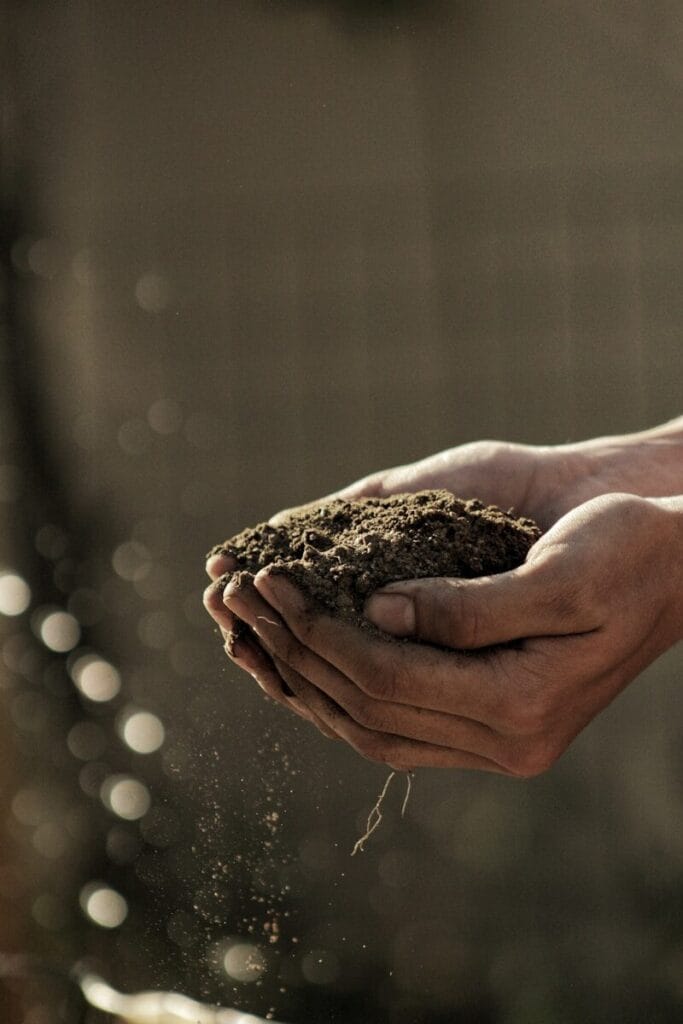
Picture this: God gets His hands dirty in the soil. The wild world was already "good," but it was uncultivated. So, God plants a garden. He brings order, beauty, and flourishing out of the wild. And notice what the author points out: God plants trees for both utility ("good for food") and beauty ("pleasant to the sight").
God isn't a utilitarian. He doesn't merely care about what is "useful." He cares about what is delightful. The flowering tree, which offers nothing but loveliness and wonder, is just as much a part of His perfect plan as the fruit tree. This reveals a God who is lavish, overflowing with splendor, and deeply committed — dare I say — to our enjoyment!
Our Shared Mission: To Tend and Keep
The story doesn't stop with God gardening alone. He hands the keys over to us:
"The Lord God took the man and put him in the garden of Eden to work it and keep it."
—Genesis 2:15
Before sin ever entered the world, God gave us a job. This is our "Creation Mandate." We were made to take the raw materials of this world and cultivate them into spaces where beauty and usefulness meet.
It’s as if God said, "I’ve shown you what I can do with a garden; now, go and do the same with the rest of the world." Whether you are raising a child, designing a building, or writing a line of code, you are called to rule the world the way God does—by tending it, caring for it, and making it flourish.
Distorted Cultivation
Of course, we know the story doesn't stay perfect. When we rebelled against God, our power to cultivate didn't disappear, but it became tragically distorted.
First, physical reality became resistant. Cultivation isn't easy anymore; it’s "by the sweat of our brow." We deal with thorns, thistles, and the frustration of work that resists to yield the results we desire.
Second, our hearts became corrupted. Instead of cultivating for the blessing of others, we’re prone to cultivate for ourselves—for our own comfort, our own lifestyle, and our own gain. We see this in algorithms designed for addiction, products designed for the landfill, over-fishing pushing species toward extinction, and predatory loans targeting the most vulnerable among us.
Redemptive Cultivation
Amid our mess, God responds with a surprising act of beauty-making. When Adam and Eve were hiding in their shame, the Bible says:
"The Lord God made for Adam and for his wife garments of skins and clothed them."
— Genesis 3:21

God becomes a clothing designer. This act of grace and forgiveness wasn't just a "spiritual" idea; it was embodied in a physical, cultivated act. He models for us how to make culture in a broken world: we cultivate not to hide or separate, but to bring near, to protect, and to heal.
Jesus Christ is the ultimate expression of this. The King of the Universe spent the vast majority of His life as a tekton—a builder. He spent His days taking trees and cultivating them into tables and doors for His neighbors. He rose in a real, physical body because He cares about this physical world and is restoring it. One day, He will return not just with a garden, but with a city—cultivation brought to its full, glorious completion.
Seeking the Peace of the City
You might think, "That’s great for a garden, but I live in a city full of complex relationships and difficult problems."
In Jeremiah 29, God’s people were in exile in Babylon—a place that didn't respect them or their God. God didn't tell them to withdraw or to fight. He told them to cultivate.
"Build houses and settle down; plant gardens... seek the peace and prosperity of the city... because if it prospers, you too will prosper."
—from Jeremiah 29
This is our calling today. Whether we love our city or feel like exiles within it, the answer is the same: plant gardens. Seek the flourishing of the place where you are. Use your energies and your capacities to bless your neighbors and bring a taste of God’s beauty into the world.
Making Beautiful Things Grow
At the end of the day, to love God is to love what He loves. And God loves this world.
We are called to be people who enter every sphere—law, education, parenting, art—not to exploit others, but to bring flourishing. This isn't about being naive; it’s about believing that God’s redemptive heart extends to every broken place, and He has invited us to join Him in making beautiful things grow even in the most unlikely soil.
The question isn't whether you're "talented" or "creative" enough. The question is whether you'll join the God who plants gardens in the dirt, who turns trees into tables, and who promises that one day, He will make all things new.
What space of the world are you in today? How might God be calling to cultivate beauty there?